
How Ambience Shapes Behavior: Why Stressful Wait Times Hurt Your Brand


Introduction
Have you ever noticed how a comfortable waiting area calms you, while an exciting but chaotic reception leaves you on edge? The ambiance of service environments—lighting, music, layout, scent—does more than decorate a space. It actively shapes emotions, behaviors, and perceptions of your brand.
In this blog, I’ll explore:
-
The science behind how physical settings (servicescapes) influence satisfaction and behavior.
-
Why a frustrating or stressful queue can damage brand loyalty, especially in the social media age.
-
Practical strategies to design calming, engaging service environments that protect brand reputation.
Let’s dive into the atmosphere—because your brand experience starts long before the service begins.
1. Servicescape: The Framework Behind Customer Behavior
The term “servicescape” refers to the physical environment in which a service is delivered—interiors, ambient elements, layout, decor, lighting, and sounds. Mary Jo Bitner’s foundational research shows that these elements influence not just perception but behavioral intentions like staying longer, exploring, or recommending a service (Bitner, 1992) Wikipedia.
Empirical studies confirm that:
- Pleasant surroundings increase customer satisfaction and drive positive behavioral intentions, such as revisiting or endorsing your brand (Ibrahim et al., 2018) mfth.journals.ekb.eg.
- Stunning servicescapes can elevate emotional response and engagement, making experiences more memorable (ScienceDirect, 2025) ScienceDirect.
Servicescapes communicate your brand values and shape anticipated behavior, so design them thoughtfully.
2. Waiting in Line: More Emotion Than Time
Waiting isn’t just a pause—it’s emotionally charged.
A global survey revealed that 70% of consumers associate waiting with boredom, frustration, or impatience (Waitwhile, 2023) Waitwhile. Psychological research adds that waiting longer can lead to more negative emotions, hurting how customers view your brand.
Interestingly, in some studies, longer waits led to more purchases—but only when customers inferred that the wait reflected others’ preferences (a social proof effect) (PMC, 2022) PMC. Still, frustration often overshadows this—especially when customers turn to social media to voice dissatisfaction.
3. Expectations vs. Reality: The Power of Subjective Waiting Time
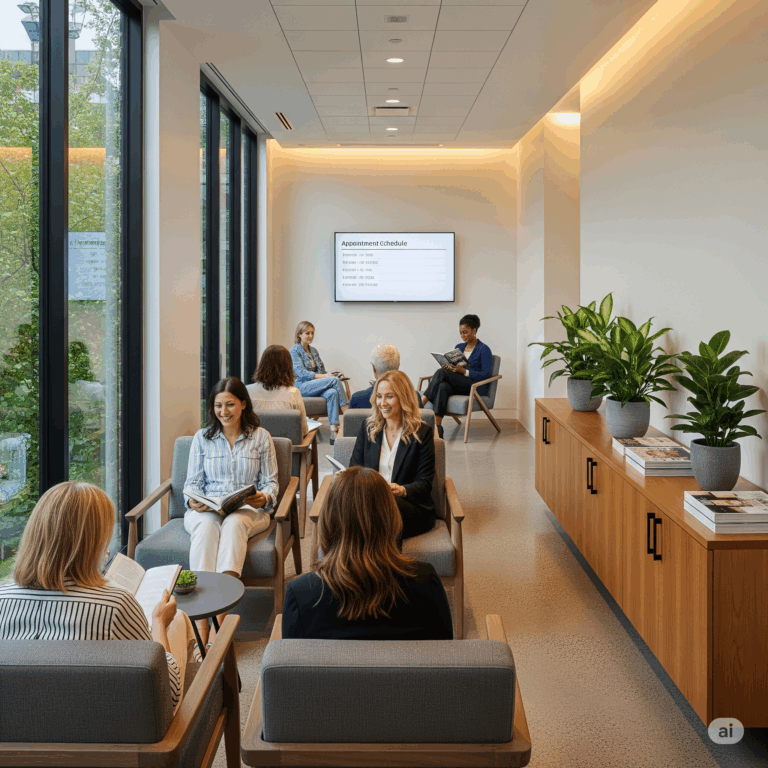
Research from hospital environments reveals that subjective waiting time (what customers perceive) affects satisfaction more than objective waiting time (actual minutes) (PMC, 2021) PMC.
For example:
- When service exceeds expectations, even a long wait can feel acceptable.
- Conversely, if perceived wait surpasses tolerance, dissatisfaction spikes.
How you set expectations—via accurate signage, ambient cues, or comforting music—can make or break customer experience.
4. Competition in Capturing Attention: Stressed Guests Post Online
In the age of smartphones, waiting pain is shareable pain. A frustrated client is likely to:
-
Post a complaint on social media.
-
Post a photo or review about the chaotic environment.
-
Tag friends or family to share the experience.
Designing slow-trickling lines with poor ambiance opens you to negative digital exposure that can damage long-term brand trust.
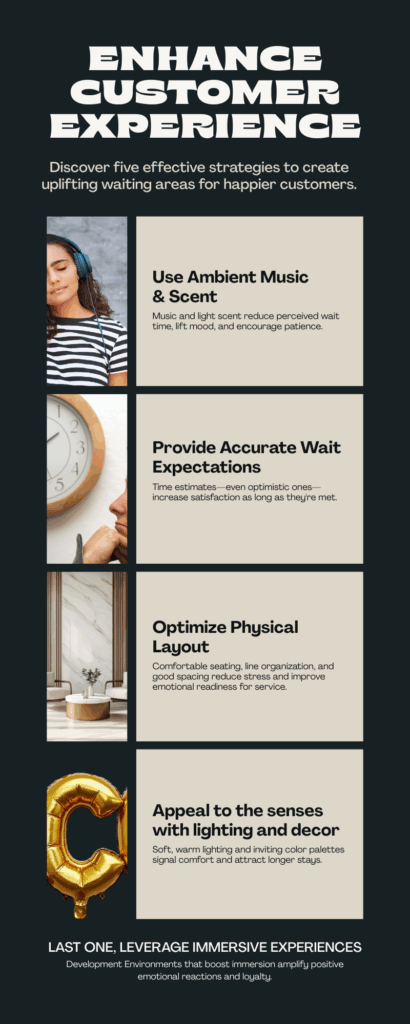
5. Crafting Calm: Best Practices for Brand-Supportive Service Spaces
6. Case in Action: A Calm Queue Equals Digital Respect
Imagine two coffee chains:
-
Chain A uses harsh lighting and loud wait music; lines appear chaotic. Customers complain online.
-
Chain B plays gentle music, has clear signage, soft lighting, and scent soothing the space. Fewer complaints, more tagged photos of cozy ambiance, stronger digital word-of-mouth.
That digital narrative becomes a second-layer brand experience, driven entirely by ambiance.
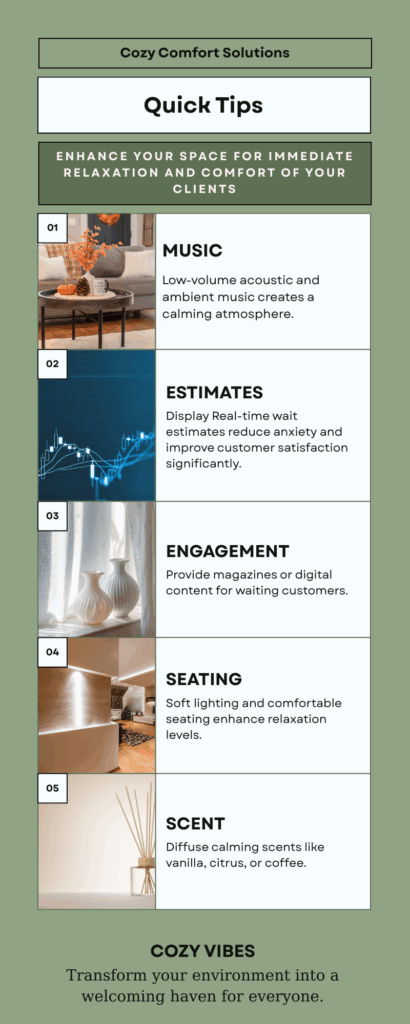
7. Quick Tips for Immediate Improvement
In the age of smartphones, waiting pain is shareable pain. A frustrated client is likely to:
-
Post a complaint on social media.
-
Post a photo or review about the chaotic environment.
-
Tag friends or family to share the experience.
Designing slow-trickling lines with poor ambiance opens you to negative digital exposure that can damage long-term brand trust.
Conclusion & Next Steps
Ambiance isn’t decoration—it’s brand behavior in space. How customers feel while waiting shapes how they perceive your service, talk about your brand, and behave in digital spaces. With small, science-based adjustments—music, light, scent, wait expectations—you can turn frustration into engagement and stress into loyalty.
Remember: a well-designed service environment is your brand whispering calm while you deliver value.
References
- Bitner, M. J. (1992). Servicescapes: The impact of physical surroundings on customers and employees. Journal of Marketing, 56(2), 57–71. Wikipedia
- Ibrahim, Y. A., Sobaih, A. E., & El-Sayiad, M. (2018). Impact of service environment and service quality on customer satisfaction and behavioral intentions in hotels. Journal of the Faculty of Tourism and Hotels-University of Sadat City, 2(1), 127–142. mfth.journals.ekb.eg
- ScienceDirect. (2025). Atmospheric effects through immersion and emotional responses. ScienceDirect
- Waitwhile. (2022). Consumer survey: The state of waiting in line. Waitwhile
- PMC. (2022). Hate the wait? How social inferences can cause customers who wait… PMC
- PMC. (2021). Effect of waiting time on patient satisfaction in outpatient. PMC
- ResearchGate. (n.d.). The impact of waiting time guarantees on customers’ waiting experiences. ResearchGate
- Wikipedia. (n.d.). Visual merchandising. Wikipedia